
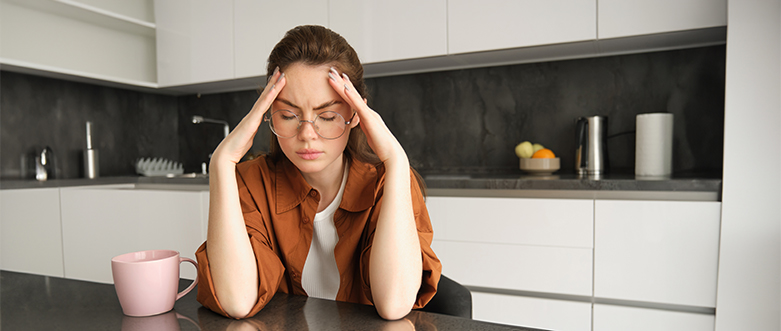
You wake up with a tight neck that wasn’t there yesterday. By lunchtime, a dull headache begins to settle behind your eyes. Later that evening, your stomach feels unsettled, your chest feels heavy, and your shoulders seem as though they have been carrying invisible weight all day.
Naturally, your first thought might be that something is physically wrong.
You schedule an appointment, undergo a few tests, and wait for answers. The results come back to normal. While that may be reassuring, it can also be confusing. If everything appears healthy, why does your body still hurt?
For many people, this is where the frustration begins. Physical symptoms are often viewed as separate from emotional experiences, as though the mind and body operate independently. Modern psychology, neuroscience, and medicine have shown that they are deeply connected. Emotional distress does not stay confined to thoughts and feelings. It influences hormones, muscles, breathing, digestion, sleep, the immune system, and even the way the brain processes pain.
This is one reason anxiety can sometimes feel as though it has taken over the entire body.
That does not mean the pain is "imaginary" or "all in your head." It means the brain and nervous system are responding to stress in ways that produce genuine physical sensations. Understanding this connection is often the first step toward reducing fear, managing symptoms more effectively, and breaking the cycle that keeps anxiety alive.
Many people think of anxiety as excessive worrying or feeling nervous before an important event. While those experiences certainly fall under anxiety, they represent only one part of the picture.
Anxiety is a whole-body response designed to protect us from danger.
Thousands of years ago, this response helped humans survive genuine threats. If someone encountered a predator or another life-threatening situation, the brain quickly prepared the body to fight, flee, or freeze. Heart rate increased, muscles tightened, breathing became faster, and attention narrowed so that survival became the only priority.
The remarkable thing is that the brain does not always distinguish between physical danger and psychological stress.
A difficult conversation, financial uncertainty, work pressure, relationship conflict, or ongoing health worries can activate many of the same biological systems that would have been triggered by physical danger.
When this happens occasionally, the body usually returns to its normal state once the stress has passed.
However, when anxiety becomes frequent or chronic, the nervous system may remain on high alert for long periods. Instead of switching off, it continues to operate as though danger could appear at any moment. Over time, this constant activation places strain on multiple body systems and can lead to a wide variety of physical symptoms.
One of the biggest misconceptions about anxiety is that it exists only in the mind.
In reality, anxiety begins in the brain but quickly spreads throughout the body through the autonomic nervous system, hormones, and chemical messengers.
When the brain perceives a threat, the sympathetic nervous system becomes activated. Adrenaline and cortisol are released into the bloodstream, preparing the body for action.
These changes are useful in emergencies. They become exhausted when they continue day after day.
Imagine driving a car with the accelerator pressed down while never fully releasing it. Eventually, the engine begins to show signs of strain.
The human body works in much the same way.
Muscles remain partially contracted. Breathing becomes shallow. Digestion slows. Sleep becomes lighter and less restorative. Pain sensitivity increases.
Eventually, the body begins communicating that strain through discomfort.
One of the most common physical symptoms of anxiety is muscle tension.
Many people are unaware they are tightening their shoulders, clenching their jaw, curling their toes, or holding tension in their lower back throughout the day.
This often happens automatically.
The brain is preparing the body for action, even though no physical action is required.
If this muscle tension continues for days or weeks, it can lead to persistent aches and stiffness.
Neck pain, shoulder discomfort, jaw pain, tension headaches, and back pain are among the most frequently reported symptoms.
Some people even develop chronic pain patterns because their muscles rarely experience complete relaxation.
Interestingly, many people only realize how much tension they have been carrying after intentionally relaxing those muscles during stretching, massage, progressive muscle relaxation, or mindful breathing.
Few anxiety symptoms create as much fear as chest discomfort.
Chest tightness, pressure, or pain understandably raises concerns about heart problems.
Because heart conditions can also cause chest pain, it is always important to seek medical evaluation for new, severe, or concerning symptoms.
Once serious medical causes have been ruled out, many people discover that anxiety was contributing significantly to their discomfort.
There are several reasons this happens.
Muscles between the ribs tighten.
Breathing becomes rapid and shallow.
The chest wall remains tense.
The heart rate increases.
These normal physiological responses can create sensations that feel alarming, even though they are not damaging the heart itself.
Ironically, becoming frightened by these sensations often increases anxiety, creating even more physical discomfort.
Stress-related headaches are among the most common pain complaints worldwide.
Unlike migraines, which involve more complex neurological processes, tension headaches often develop gradually.
Many people describe them as a tight band wrapped around the head or pressure behind the eyes.
Again, muscle tension plays an important role.
Tight neck and scalp muscles, poor posture during stressful workdays, reduced hydration, and lack of restorative sleep all contribute to these headaches.
The emotional stress itself becomes physically visible through muscle contraction.
Have you ever noticed feeling nauseated before giving a presentation or losing your appetite during stressful periods?
This happens because the digestive system and the brain communicate constantly through what researchers call the gut-brain axis.
The digestive tract contains millions of nerve cells and communicates directly with the central nervous system through the vagus nerve.
When anxiety increases, digestion often slows or becomes irregular.
Some people experience stomach cramps.
Others develop bloating, nausea, constipation, diarrhea, or symptoms similar to irritable bowel syndrome.
This does not mean anxiety causes every digestive condition, but psychological stress can significantly influence digestive function.
The relationship also works in the opposite direction.
Digestive discomfort can increase anxiety, creating another self-perpetuating cycle.
Perhaps one of the least understood aspects of anxiety is its ability to amplify pain that already exists.
The brain does not simply detect pain.
It interprets it.
When someone is anxious, the brain becomes more alert to potential threats, including physical sensations.
A minor ache that might normally go unnoticed suddenly becomes highly noticeable.
The brain begins monitoring it constantly.
Questions appear:
"Why does this hurt?"
"What if something serious is wrong?"
"Why hasn't this gone away?"
This increased attention changes how pain is experienced.
Researchers refer to this as pain amplification or central sensitization.
The nervous system becomes increasingly sensitive, making ordinary sensations feel more intense than they otherwise would.
Poor sleep and anxiety often reinforce one another.
An anxious mind struggles to settle.
A tired brain struggles to regulate emotions.
Sleep deprivation also lowers pain tolerance.
People who consistently sleep poorly often report more headaches, muscle pain, fatigue, and emotional distress than those who sleep well.
Improving sleep quality is therefore not simply about feeling rested.
It is also one of the most effective ways to reduce physical symptoms associated with anxiety.
Maintaining a consistent sleep schedule, reducing evening screen exposure, limiting caffeine later in the day, and creating a calming bedtime routine have all been shown to support healthier sleep.
When people become anxious, breathing often becomes faster without them realizing it.
Instead of breathing deeply through the diaphragm, they begin taking quick, shallow breaths from the upper chest.
Over time, this alters carbon dioxide levels in the blood, contributing to dizziness, tingling sensations, chest discomfort, and feelings of unreality.
Learning slower diaphragmatic breathing helps restore balance.
One practical approach is inhaling gently through the nose for four seconds, allowing the abdomen to expand, then exhaling slowly for six seconds.
The goal is not to force deep breaths but to create slower, more comfortable breathing that signals safety to the nervous system.
Exercise is often recommended for anxiety, but its benefits extend beyond improving mood.
Physical activity helps release accumulated muscle tension.
It improves sleep.
It increases blood flow to the brain.
It supports healthy regulation of stress hormones.
Perhaps most importantly, movement teaches the brain that increased heart rate and faster breathing can occur safely.
For someone living with anxiety, this is a valuable lesson.
Instead of interpreting every physical sensation as dangerous, the brain gradually learns that these bodily changes are normal.
Moderate activities such as walking, cycling, swimming, yoga, or dancing performed consistently appear to provide significant psychological benefits.
The emphasis should be on regularity rather than intensity.
Although anxiety produces physical symptoms, thoughts influence how those symptoms are experienced.
Imagine two people feeling their heart race.
One thinks:
"My body is responding to stress. This will settle."
The other thinks:
"I'm having a medical emergency."
The physical sensation may initially be similar.
The emotional outcome becomes very different.
Cognitive behavioral therapy (CBT), one of the most extensively researched psychological treatments for anxiety, helps people identify and challenge catastrophic interpretations of bodily sensations.
Over time, this reduces fear, which often reduces physical symptoms as well.
Recovery from anxiety-related physical pain rarely comes from a single technique. More often, it develops through consistent daily habits that help calm the nervous system over time.
Start by creating predictable routines. The nervous system tends to function more smoothly when sleep; meals, movement, and rest occur at relatively consistent times.
Spend time outdoors whenever possible. Exposure to natural daylight helps regulate circadian rhythms, supports healthier sleep, and has been associated with improved mood.
Limit constant stimulation. Many people move from emails to social media to television without allowing the brain any true periods of quiet. Building short moments of stillness into the day gives the nervous system opportunities to reset.
Practice regular body awareness. Rather than waiting until pain becomes severe, pause several times during the day to notice whether your shoulders are tense, your jaw is clenched, or your breathing has become shallow. Small corrections made consistently can prevent tension from accumulating.
Stay socially connected. Anxiety often encourages withdrawal, yet supportive relationships remain one of the strongest protective factors for psychological well-being. A conversation with someone you trust can help regulate stress in ways that are difficult to achieve alone.
Finally, be patient with yourself. Nervous systems that have remained in a heightened state for months or years rarely settle overnight. Progress is often gradual, with good days and more challenging days along the way.
Although anxiety-related pain is common, it should never be assumed that anxiety is the only explanation for physical symptoms.
Persistent, severe, or unexplained pain always deserves appropriate medical assessment.
Once physical illnesses have been evaluated, mental health professionals can help determine whether anxiety is contributing to ongoing symptoms.
Treatments with strong scientific evidence include Cognitive Behavioral Therapy (CBT), Acceptance and Commitment Therapy (ACT), mindfulness-based interventions, and, when appropriate, medication prescribed by a qualified healthcare professional.
Seeking psychological support is not an admission that the symptoms are imaginary.
It is an acknowledgment that the brain and body function as one integrated system.
Perhaps one of the most compassionate ways to understand anxiety is to stop viewing it as an enemy.
Anxiety is, at its core, a protective system that has become overly sensitive.
It is trying to keep you safe.
The problem is not that the system exists.
The problem is that it sometimes remains switched on long after the danger has passed.
When this happens, the body continues preparing for battles that never arrive.
Muscles tighten.
Breathing changes.
Sleep suffers.
Pain appears.
Recognizing this pattern can transform the way we respond.
Instead of asking, "Why is my body betraying me?" a more helpful question becomes, "What might my nervous system be trying to tell me?"
Often, the answer is surprisingly simple.
It is asking for rest where there has been constant pressure.
Safety where there has been uncertainty.
Connection where there has been isolation.
And kindness where there has been self-criticism.
Understanding the connection between anxiety and physical pain does not make the symptoms disappear overnight. But it replaces fear with knowledge, and knowledge with practical action. With time, consistent habits, and appropriate support when needed, the nervous system has a remarkable capacity to recover. The body is not working against you; it is responding to the messages it has been receiving. When those messages begin to change, the body often follows.
You don't have to figure out the connection alone. Get support for anxiety and the symptoms that come with it.
Subscribe to our newsletter and get the latest updates and insights - straight to your inbox.